Feb 26, 2026
Lanternfly Eggs and How to Remove Them
In light of the massive amount of snow that we’ve been receiving here in New Jersey, we would like to discuss how the populations of these invasive lanternflies persist across winters.
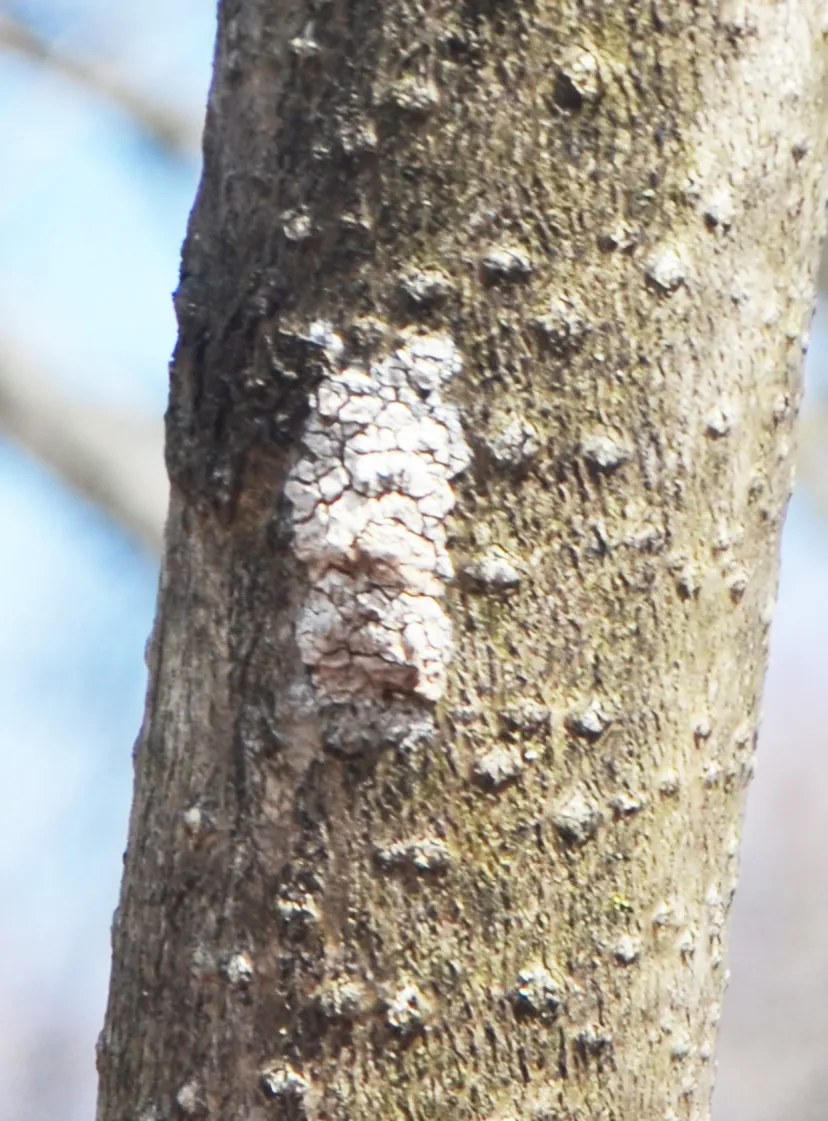
While all of the adult lanternflies die in the fall, they first lay clusters of eggs on trees in September and October. These eggs are then covered by a waxy substance secreted by females, which protects them from the elements and allows them to survive low temperatures. They look like grayish splotches about an inch long, like this:
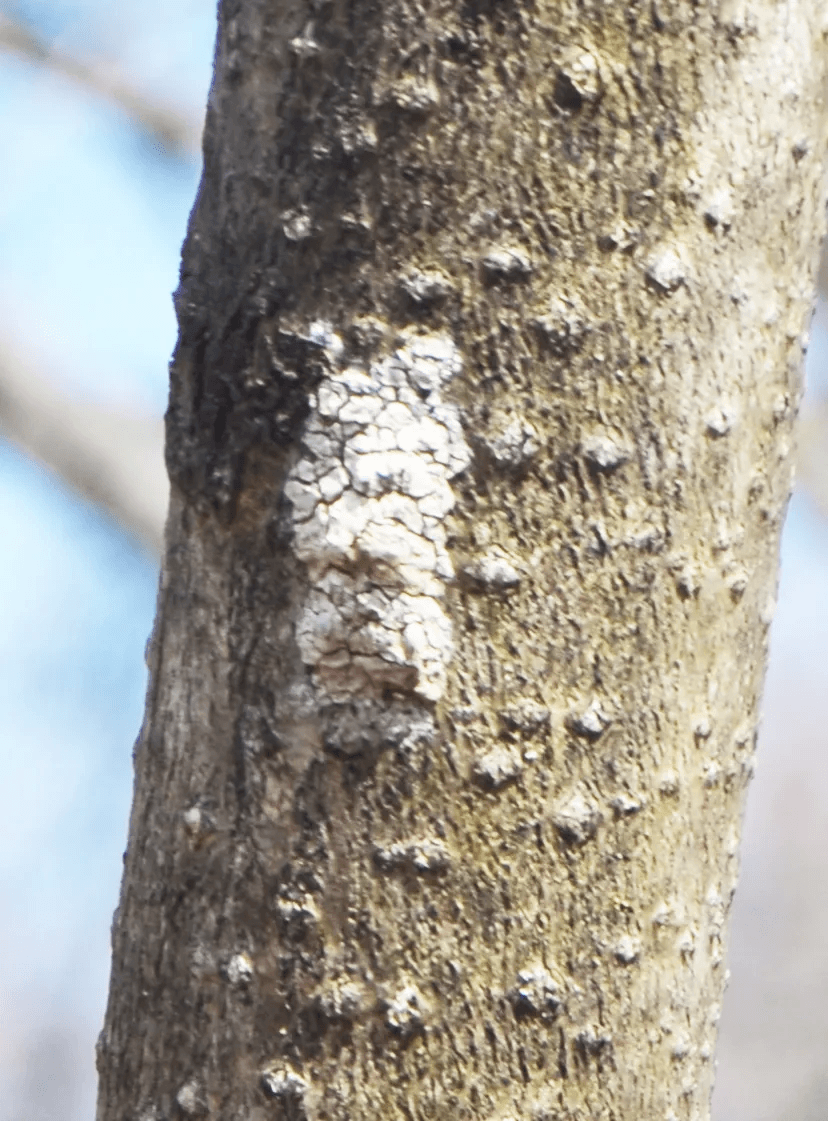
These eggs can be laid on any flat surface, not just on the trunks and in the branches of trees, and particularly in places that are sheltered. In more rural areas, check rocks, sheds, and outdoor equipment. In more urban areas, check the sides of buildings.
If you can find them, then you can dispose of them. It can be a very effective preventative step. There are two main ways of doing this:
First, you could simply crush them up, ensuring that all of the eggs are popped.
Alternatively, if you want to be more thorough, then you could scrape them off of whatever surface you’ve found them on. This can be done with a knife, putty knife, or even a credit card. Then coat the inside of a plastic bag with either rubbing alcohol or hand sanitizer and deposit the eggs inside. After squeezing out all the air and sealing it, throw the bag out.
The eggs can be disposed of at any time between being laid and hatching, so from the fall to the spring.
(Tree of Heaven)
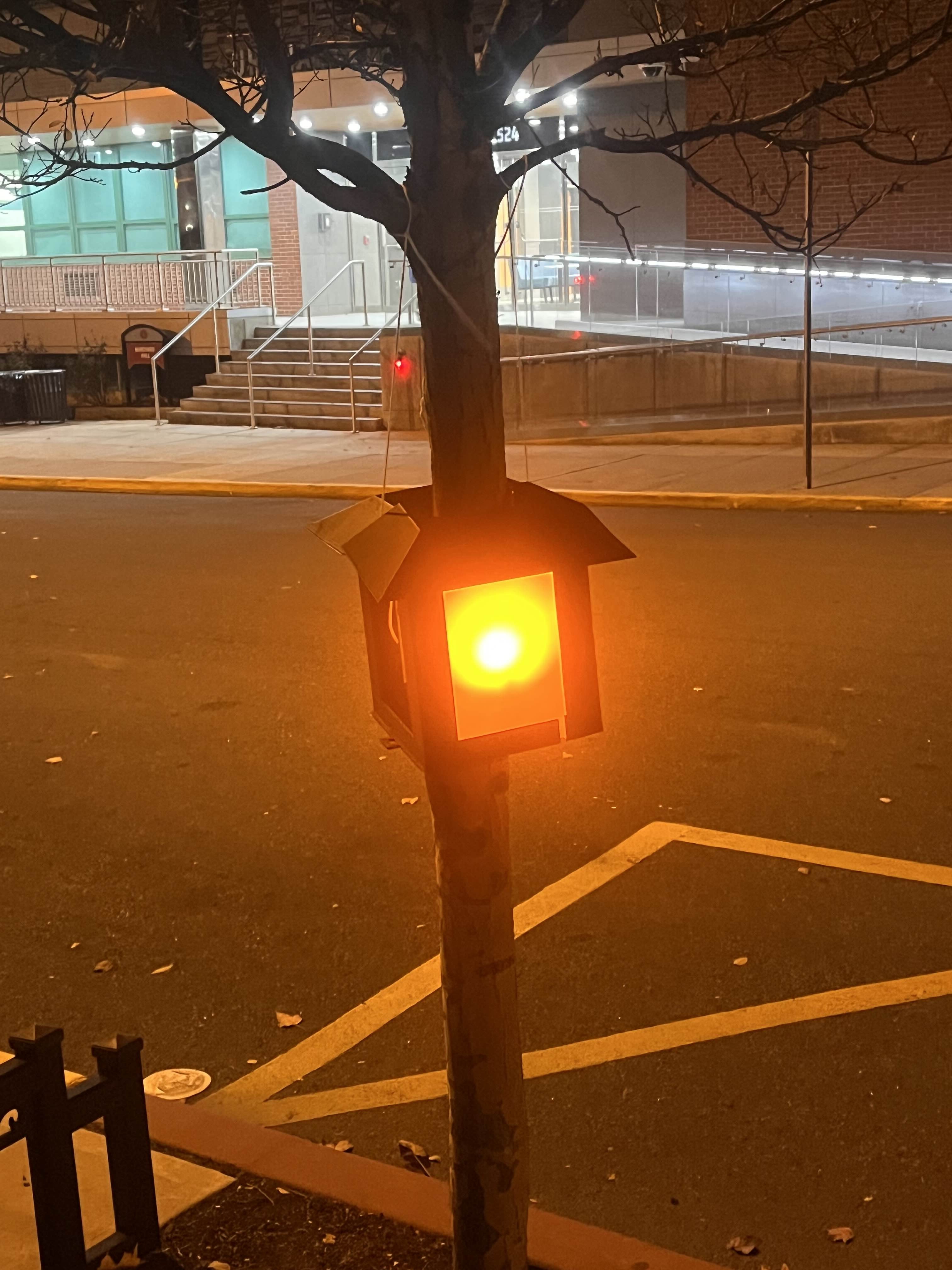
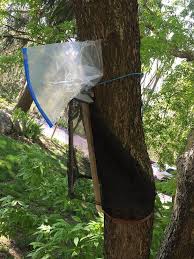
You could also make or purchase traps to put on existing trees. Such as circle traps or those that we are making here at Lycorma. In the images below, left is our trap and right is a home-made circle trap.